


An efficient LIMS starts with well-structured processes.
Implementing a LIMS shouldn’t just digitize existing processes. It should create a more efficient, standardized operation that’s ready to evolve.
That’s why, before configuring the system, Actiz analyzes, maps, and redesigns the laboratory’s processes. The system is born serving your operation — not the other way around.
See how the method worksHow we do it
A journey, not just the installation of a system.
Immersion & Process Reengineering
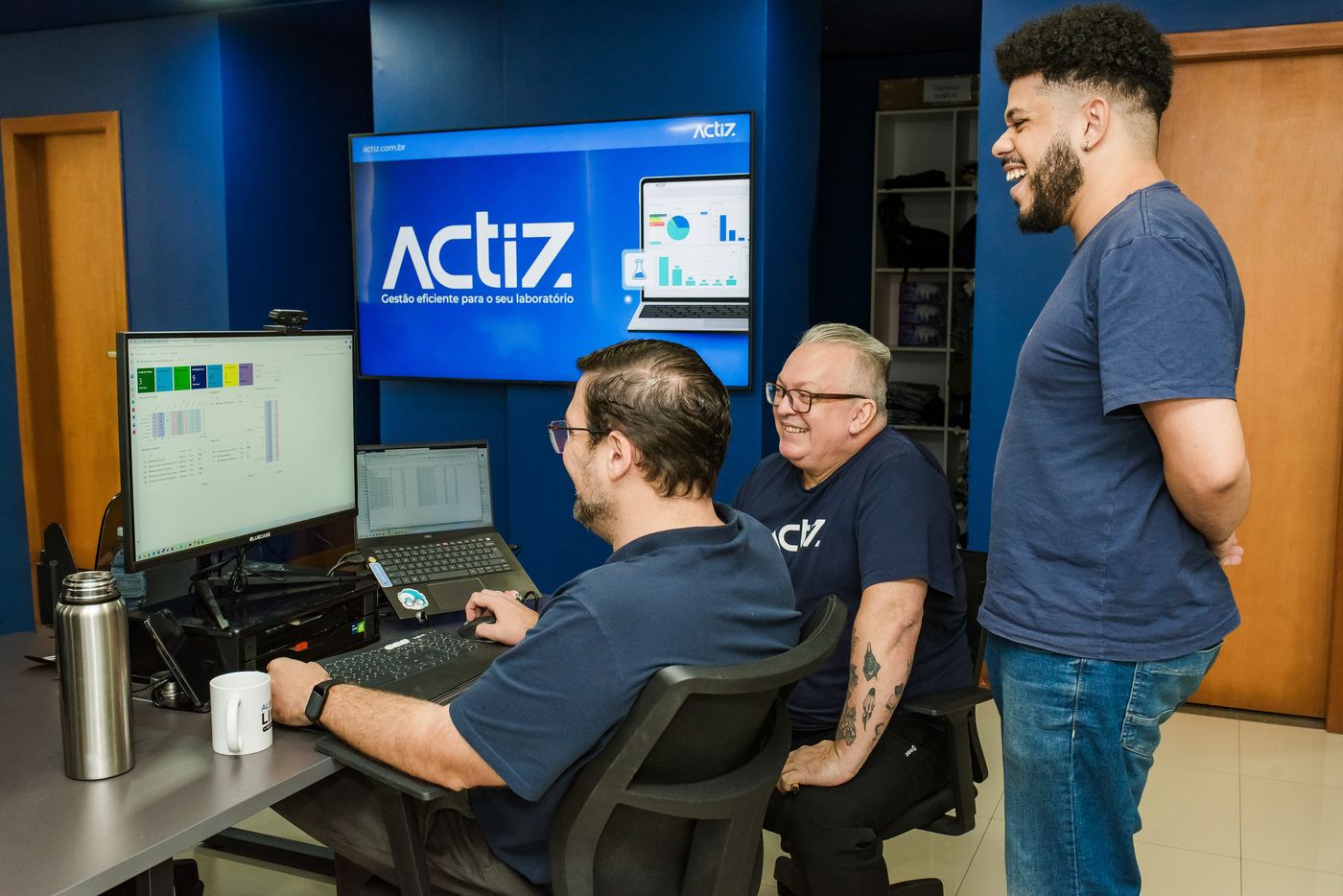
An Actiz specialist conducts a full immersion into the client’s operation, assessing bottlenecks, rework, regulatory requirements, and optimization opportunities not yet identified. System configuration only begins after this in-depth diagnosis of the operational reality.
You get: a complete diagnosis of the operation, with bottlenecks and opportunities mapped before any configuration.
Why we do it this way
A system doesn’t fix a process. It accelerates what already exists.
Most LIMS implementations fail for the same reason: they confuse digitization with transformation. Swapping a spreadsheet for a system, without reviewing the process behind it, solves nothing — it just automates inefficiency with a nicer interface. Technology doesn’t fix process failures, doesn’t resolve operational silos, and doesn’t replace management. That’s why Actiz never starts a single configuration before deeply understanding the client’s operation.
Common implementation
- ! Configures the system on top of the process as it is, errors included
- ! Tries to deliver every feature at once
- ! Purchase decision made without input from day-to-day operators
- ! Vendor understands software, not laboratories
Actiz methodology
- ✓ Reviews and redesigns the process before configuring anything
- ✓ Progressive adoption, starting with what solves the most urgent pain
- ✓ Involves analysts and key users from the diagnosis stage onward
- ✓ Team with technical knowledge of daily operations, risks, and industry regulatory requirements
Implementing a LIMS isn’t about technology. It’s about transforming how the laboratory works.
“With Actiz LIMS, we were able to establish a more structured and secure workflow. The system allows us to ensure complete traceability of analyses, automatically validate data, and maintain centralized document control. This has directly contributed to our progress toward full ISO 17025 compliance.”
Nelson Villafrade, Head of Systems at Fundases
Common questions about the process

It depends on lab complexity, but the 4 stages add up to weeks, not months. The real timeline is set during the Immersion & Process Reengineering stage — after we deeply understand your operation, not before.
We need access to whoever runs the process day-to-day, not just management. It’s conversations and bench observation during the Immersion & Process Reengineering stage — a few hours spread across the stages, no full-time dedication.
Nothing formal. The method is ours; on your end, just access to real operations and team availability during the Immersion & Process Reengineering stage. Documented procedures help, but they’re not a prerequisite.
Resistance is expected when the process arrives finished from above — that’s why the new workflow is redesigned with the people who’ll use it, still during the Immersion & Process Reengineering stage. Involvement from the start is what makes adoption happen.
Support begins in the Specialized Support stage, with active hands-on support during the first real operations — led by chemists and specialists with fast response times. We adjust what’s needed based on real use, and the relationship continues in the Continuous Evolution stage, at no additional cost for new roadmap modules.
Your process first. Then the system.
Schedule a diagnosis conversation and see what the map of your lab’s workflow would look like.
Schedule diagnosis