Veja como o Actiz LIMS pode transformar seu laboratório
Peça uma demo
Ensuring GLP Compliance with a LIMS
Understand the principles of Good Laboratory Practice (GLP) and how a LIMS for quality control laboratories can help reinforce them.


Understand the principles of Good Laboratory Practice (GLP), and how a LIMS for quality control laboratories can help reinforce them.
You’ve probably already heard of the term GMP (Good Manufacturing Practice), a concept that has been used across industries for years and is quite well known.
Regulated by competent bodies, it aims to ensure clean and safe production, reducing pollution and waste levels.
But are you familiar with GLP? Good Laboratory Practice is the set of processes that ensure the quality of your laboratory, from the maintenance of the equipment used to the proper disposal of the waste generated in every process.
However, since these are daily occurrences within laboratories, some pillars can sometimes go unnoticed, which may have a major impact down the line.
So, to help you maintain the best management standard in your laboratory, in this article you will learn what the Principles of GLP are, and how a LIMS can help you reinforce them.
What Is GLP?
It is well known that the laboratory environment is intended for carrying out experiments, research, and processes in general.
However, it’s no secret that the substances used pose a risk to those who handle them, as they are frequently strong acids, superheated solutions, gases, etc. Such substances are responsible for poisoning, burns, electric shocks, and even fires.
It is also important to note that improper handling of chemicals is not the only cause of laboratory accidents; many accidents can occur for a variety of reasons, such as:
· Failure to comply with safety regulations;
· Rushing to obtain results;
· Improper handling of fragile materials;
· Inadequate facilities;
· Incorrect use of personal protective equipment;
· Incorrect use of collective protective equipment.
This shows that, for chemical reactions to occur successfully and to prevent possible accidents, the workplace must correctly follow Good Laboratory Practice.
This way, products maintain a high level of quality and contribute to the safety and health of consumers, as well as the entire team working in the laboratory.
Keep reading to learn more about how a LIMS reinforces GLP at every step of the laboratory process.
Check it out: Comparing LIMS solutions: everything you need to know
Environmental Monitoring Within the Laboratory
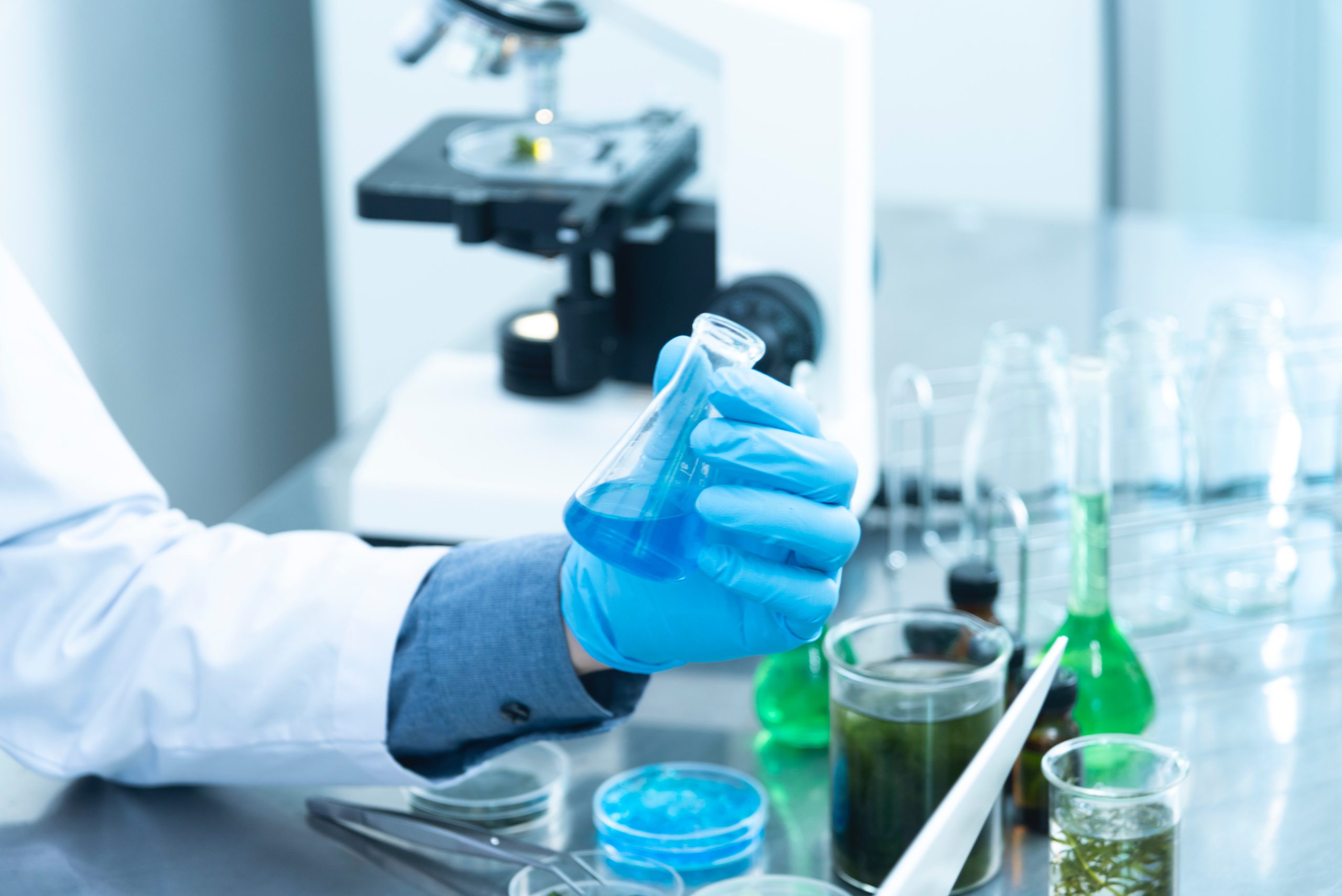
Environmental monitoring is part of GLP, ensuring that the laboratory meets specific quality standards, and having adequate safety in place is essential to this.
Validating and ensuring the suitability of a laboratory’s facilities, systems, and equipment is one of the most important pillars in managing environmental monitoring information within the laboratory.
The ability to prevent potential contamination, accidents, waste, and other issues is essential to ensuring that a laboratory complies with GLP.
Within a laboratory there are several parameters that can influence the result of the product being analyzed, but with a LIMS it is possible to monitor each one of them.
Checking a wall-mounted thermo-hygrometer every hour isn’t the most efficient approach, is it? Waiting until the product is ready to be tested and risking mistakes is something every laboratory tries to avoid.
Redoing the entire process and being forced to waste time, materials, and labor — and, in many cases, jeopardizing the laboratory’s own reliability and credibility — are less than ideal situations for management.
However, with a laboratory management system (LIMS), it is possible to establish specification limits, controlling the environment in real time and ensuring a fully functional process with total quality across samples, tests, and more.
In addition, it is also possible to create alerts within the system so that, should any data point fall outside the limit, response time is reduced.
Learn More: How a LIMS works
Maintenance of Facilities and Equipment
Ensuring the proper functioning of equipment and facilities is essential in order to meet the need for generating tests with reliability and safety.
By keeping equipment and facilities in good condition, it is possible to preserve the environment and keep costs under control, as well as prevent failures from occurring, and avoid future breakdowns due to parts wear
With a LIMS, it is possible to integrate with your laboratory’s equipment and instrument maintenance and calibration programs.
This way, they can be marked as unavailable if they are out for maintenance or calibration, preventing tests from being assigned to specific instruments when those are marked as unavailable.
With this, the LIMS helps you deliver greater performance, durability, and service life for your facilities and equipment.
Demonstration of Competence

Competence and training records can be kept within the LIMS, and it is possible to prevent people from performing specific tasks if they do not hold a certain valid competence, such as training.
All certificates and training records for each employee are linked to the system, which makes it easier to control each employee’s individual training within the laboratory.
In addition, the LIMS can also track the validity of each document, ensuring that the person is always qualified to carry out every activity assigned to them.
This process can be done manually, by contacting HR and requesting physical documents, but it wastes time and still carries the risk of losing information or of a management error regarding the validity of certificates or courses.
In the system, if the individual does not meet a given specification, they will not be available to be assigned as the person carrying out a particular analysis or test.
This system feature confirms that the laboratory follows GLP, by ensuring quality assurance across all processes, since it confirms that only qualified individuals carry out certain laboratory activities.
Conclusion
In this article you learned a bit more about GLP, and how having a LIMS can help you ensure these practices are followed in your laboratory.
Accordingly, a LIMS can be used extensively to control laboratory procedures for managing, tracking, and reporting samples, tests, results, and more at every step, from raw material analysis through to the finished product.
In this way, the Laboratory Information Management System is able to meet regulatory compliance requirements, such as Good Manufacturing Practice (GMP).
If you want a system that guarantees compliance with all GLP requirements, while efficiently optimizing your entire laboratory process, consider Actiz. Get in touch and find out how our system can transform your laboratory’s day-to-day operations.